
Private property and the American Dream
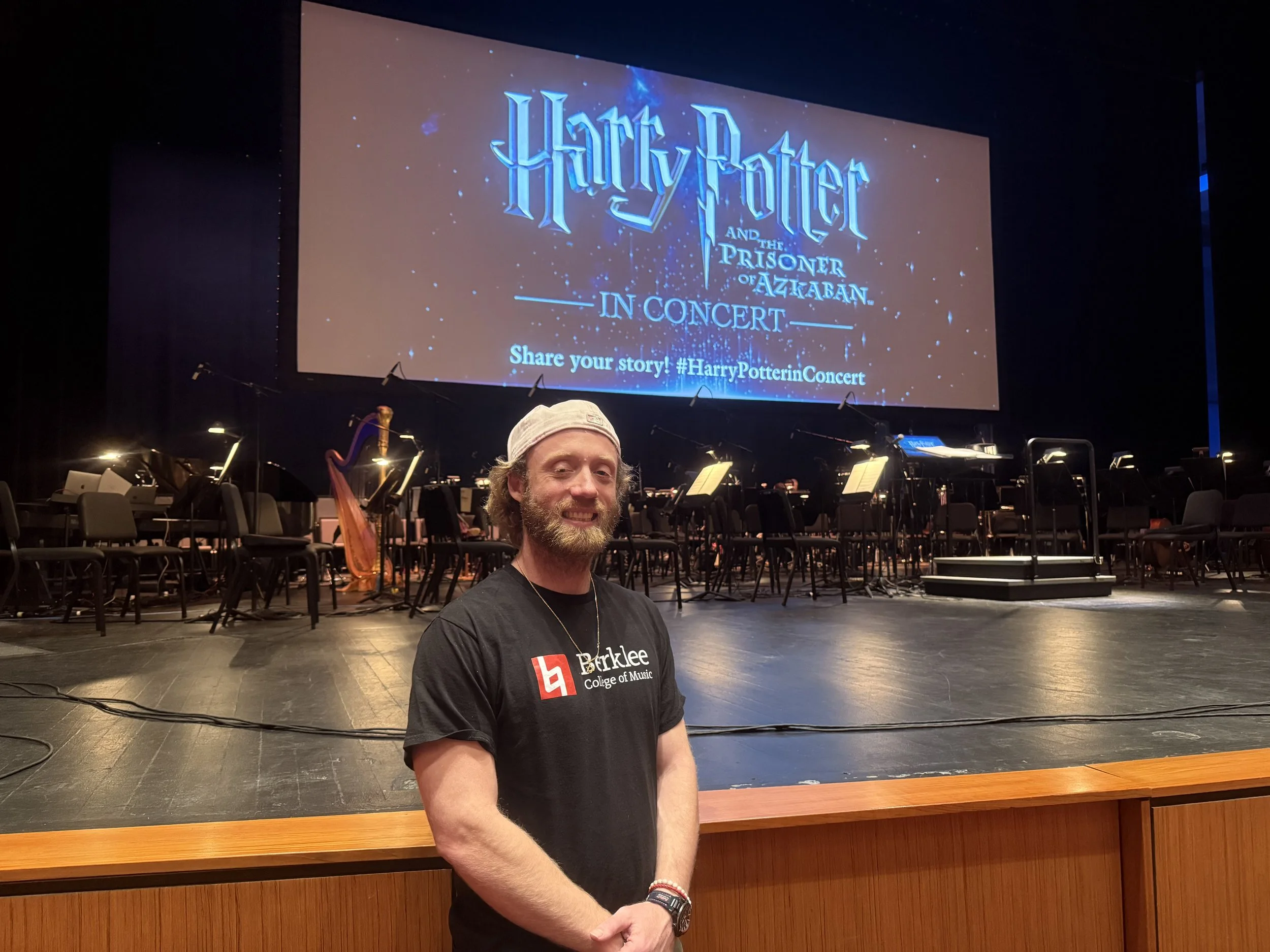
Elijah at the Harry Potter and Prisoner of Azkaban concert at the Safe Credit Union in Sacramento, CA. October 2025.
The white picket fence dream is intimately tied into the history of the American Dream. Capitalism, in this sense, is fundamental to the American Dream. Especially for an American like me who spent a majority of his childhood in a single family home, the goal of buying real estate for the purpose of owner occupancy was imprinted into my psyche from birth. With time, education, and incredible economic stressors, my perspective has evolved significantly.
This evolution required leaving the house—something that increasing amounts of young adults cannot or chose not to afford or experience. There was often falsely reassuring language used during my childhood from my former childhood legal guardians, but in time I began to understand the language of types of poverty including “house poor.” I was raised in an environment highly structured around being house poor. I did not understand how significantly this shaped my relationship to housing, financial wellbeing, and emotional wellbeing until I was into my 20s. As is often the case for those who grow up below the true “middle class,” you only know what you can see and you reasonably assume that what you see is normal. At minimum, you are forced to accept it as normal. What it meant for me is that I left my home state twice in my childhood. New York in 2001 and New England in 2004. Grocery shopping was based on purchasing whatever was the absolute least expensive things possible.

Elijah Abramson M.D. after graduating medical school. Sacramento, CA. May 2020.
In possibly more extreme terms, we ate in restaurants and not at home probably once a year. We had take out food only slightly more than that. The struggle for me was that I was raised in a town that also had families with more significant wealth. While Half Moon Bay might be considered rural, San Mateo County as a whole has—and even had—a number of towns with a significant degree of wealth. Saint Ignatius, Sacred Heart, Serra High School, Menlo, Menlo-Atherton were all neighboring schools that prepared some of the wealthiest zip codes in the nation to enter the adult world. So I was surrounded by families, especially during athletics, that had means. I could not necessarily appreciate as a child the fact that my guardians selected to spend the overwhelming portion of their income on private property. What makes house poor families sad is that all of their finances and therefore essentially all of their time and energy is forced to upkeep a house. In a sense, in those settings, the house is hardly different from being on house arrest. The free flow through the world is lost and everything comes back to being inside a box because the financial trap creates the emotional trap.
This progresses even more detrimentally into one’s psyche when you consider that it becomes normalized and glorified, especially in the context of the American Dream. From house poor to house arrest, the private property becomes really fairly similar to a jail cell. At a certain point, you have to accept it. You have to appreciate it and be grateful for it. Certainly, if you are raised in that environment you learn to accept it. But in reality, one should ask any parent or legal guardian: does this situation do the children any good? Is being house poor the right choice? Will a child truly benefit from his or her guardians owning property vs. renting it? To me, the answer is clearly no.
As would be fairly inevitable with someone who grew up in a house poor environment where guardians contributed essentially nothing to my financial, physical, or emotional safety, housing instability was a highly prevalent part of my 20s. My means and dreams forced me to rent rooms in a number of highly unsettling situations. This included one where the bedroom was effectively the size of the bed, another where there was a couple with a child where the man was a physically abusive alcoholic. It included one where the landlord had a rat problem that also infested my living space. And when I went to medical school, as I was partaking in sub-internships and finishing my fourth year in medical school just before and during the early parts of covid, I called approximately 10 spaces home in a matter of 8 months. Of course, this would exacerbate and harden my desire to own private property. The apparent stability felt priceless. Finally, traditional American personal financial logic encourages home ownership as a “good investment.” (But, in reality, that advice really applied to previous generations like boomers…)
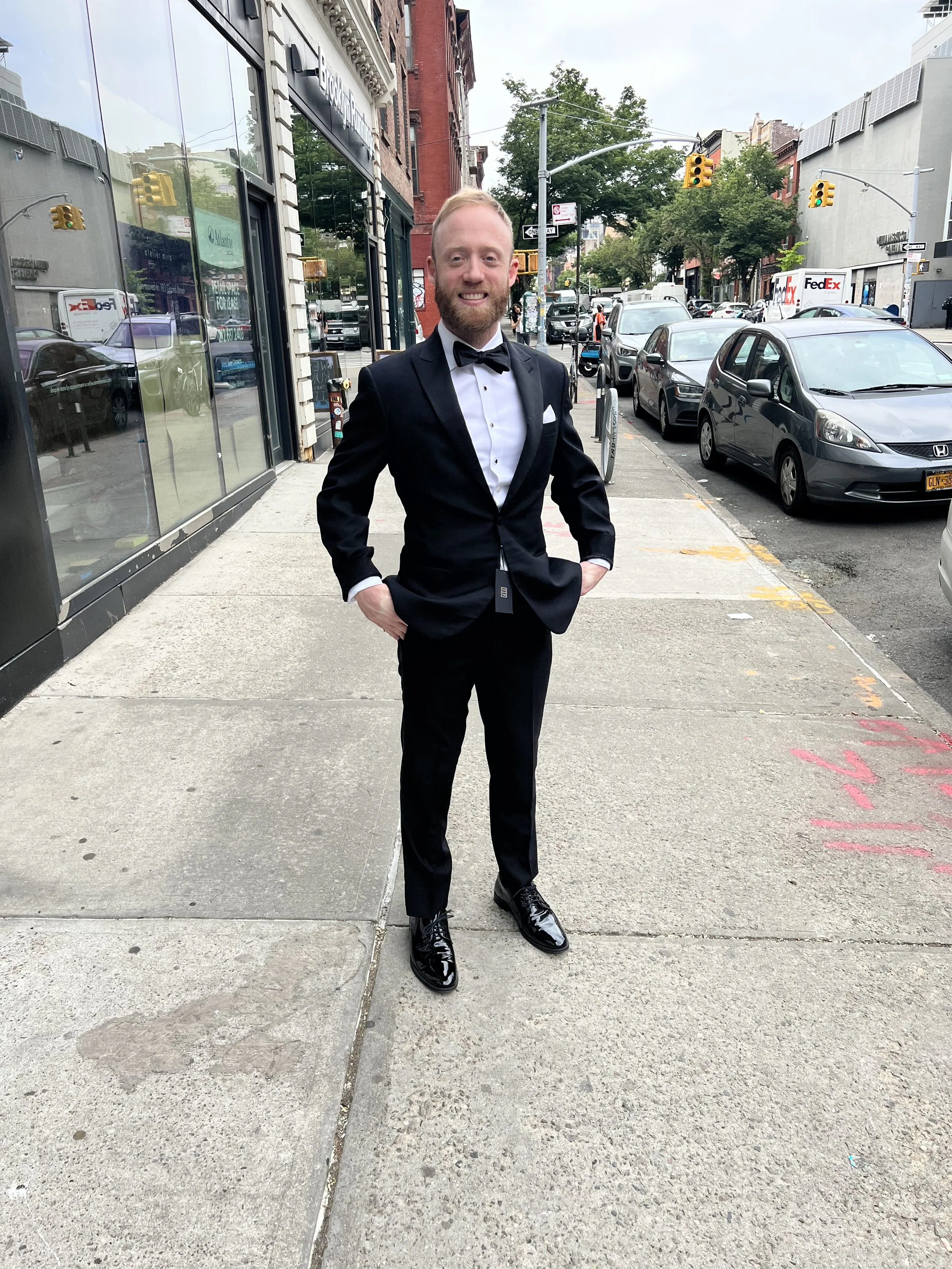
Elijah in Williamsburg. Brooklyn, NY ca. 2022
As I began to finish my emergency medicine residency training, I started to more concretely consider owning private property. It was my main priority. Not a fancy car, not jewelry…my priority was home ownership. Everything I had learned and experienced made it my top priority. I had tutoring jobs making $20/hr after attending university and had thoughts at that time—even with rats roaming my living space—that the amount of money that I was making was enough to do things I wanted with disposable income. I could do the things that I wanted with modest means and I was and am creative enough and curious enough to be able to find outsized value for a given price. Modest means and big dreams necessitate it. But the experience and knowledge of feeling what a stable housing situation meant and unstable ones meant gave me a simple, clear framework: buy the house and everything else will fall into place.
So I did my research. I wanted to own a home but knew I did not want to be house poor. I know what that feels like. So what is a reasonable price for my first purchase of owner-occupied private property? Twice annual income was a number that felt like a reasonable and most simple estimate of affordability. I also knew a number of physicians that owned second, vacation homes. So I explored those thoughts. Certainly with astronomic student debt, the vacation home was a long term goal, but it was definitely a part of my plan. The Sacramento valley has affordable real estate relative to the Bay Area and Los Angeles. Lake Tahoe is a short drive away and as a day trip and vacation destination is fantastic.
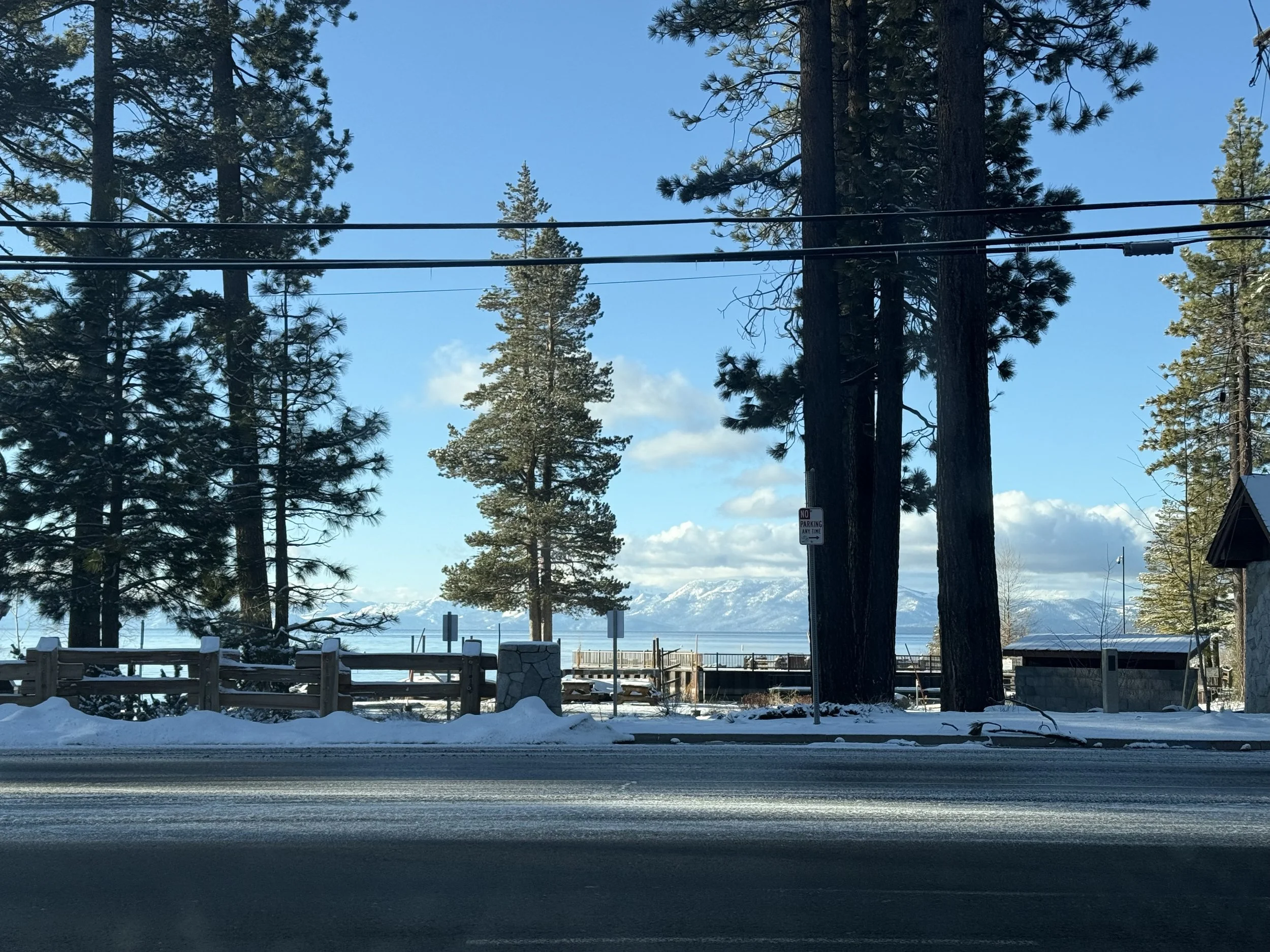
Kings Beach, Lake Tahoe. Photograph taken by Elijah
So, at this phase in my life, looking at my first moment of likely long-term employment and financial stability, I envisioned owning two plots of private property. One for primary residence and one for vacationing.
This perspective began to change. Rapidly. Within a course of months, the main reason that it changed was because I realized the obvious: more money into one small area on Earth will tie you down to that area. Two areas will tie you down to two and this means the time, money, and energy spent in those areas will mentally strap you down to those areas. Vacation at the vacation home will be work.
As someone who loves to travel and believes in the incalculable value of travel for fun as well as connection to purpose, humanity, self actualization, and empathy, I started to realize that owning two plots of private property make absolutely no sense. Essentially regardless of the cost, why spend and tie down any money to a plot of land? The alternative is I can rent a space or stay at a hotel for a short period of time…making, as the saying goes, the world my oyster. One primary residence is enough. A “home base,” so to speak.
But with the current economic landscape and an evolving framework regarding the concept of renting vs. “owning” space, I have even evolved beyond the framework that owning two plots of private property is too much. Considering that home loans are for 20 to 30 years generally, what honestly is the difference between paying rent to a person vs. paying “rent” to a bank? Especially a bank that, if something goes wrong at a large scale, is going to be bailed out anyway? There really is no difference. Not only that, but the economic landscape as currently constructed is highly unfavorable to home ownership for young people. COVID interest rates that boomers benefited from are now stifling any opportunity to realize gains in owning. Realistically, the stock market is safer and more liquid. Isn’t safety and liquidity ultimately more in line with true freedom?
So in totality, after being house poor and experiencing housing stability and considering owning primary and vacation private property to owning private property to where I am at now…I have arrived at a truly fundamental question: what is the purpose, what is the value of private property in the 2020s? Could it be no more than a capitalist dream of generations past that have seen massive gains that are no longer possible? And even if they are possible, the more important question is this: is it worth it? Or could it be one of the largest contributors to wealth inequality and unrealistic, aspirational attempts to satisfy the dreams, traumas, and false teachings of privileged generations passed? Is owning private property no more than selling labor power to private banks and capitalists? And if so, is it not better to consider housing as a human right and just maybe, privatizing housing and property is no longer a reasonable and feasible strategy? If we can steal and colonize land, do we really ever have the right to privately own it? Is a home really defined by private ownership?